TCF Post Analysis
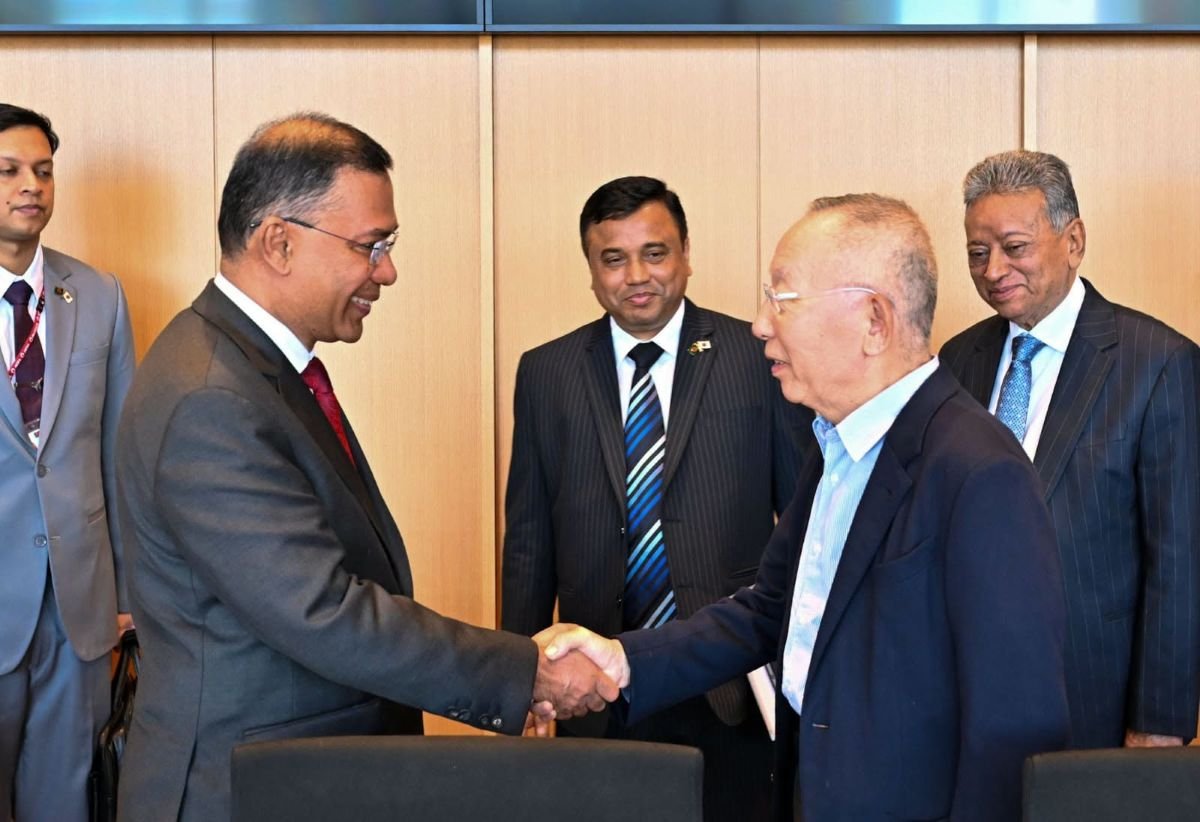
When Prime Minister Tarique Rahman met Fast Retailing’s leadership in Tokyo on October 28, the notable part was not that he pushed for higher volumes of basic garments. He urged support for building capacity in man-made fibres, technical textiles and sustainable apparel. Dhaka is telling one of the world’s leading and fastest-growing apparel retailers that it is now looking for the technology, skills and materials behind the garment, not just the stitching.
A delegation built for a bigger conversation
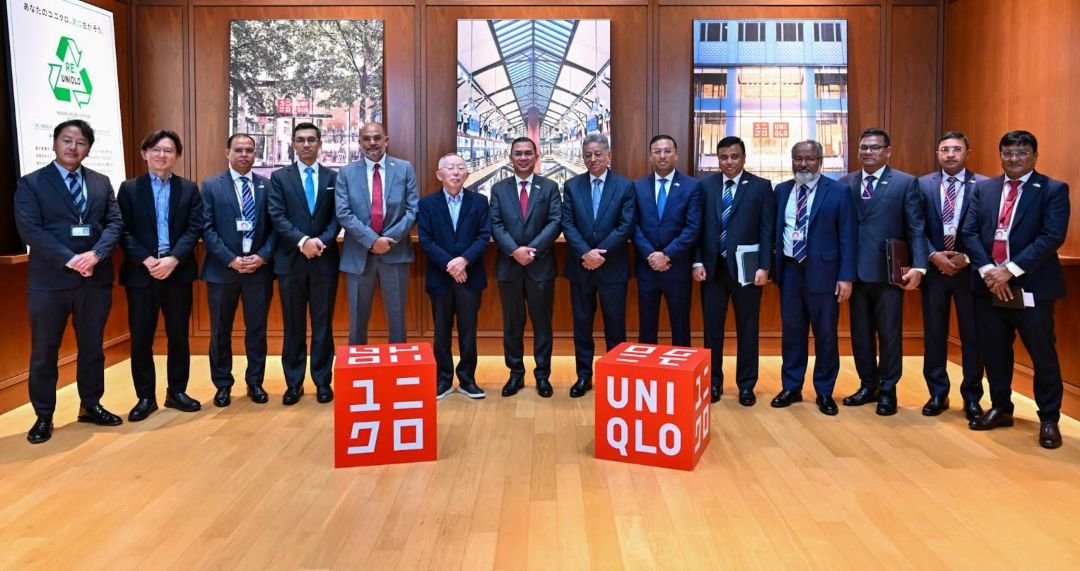
Tarique met a Uniqlo delegation led by Tadashi Yanai, chairman, president and CEO, with Director Takeshi Okazaki and Group Senior Executive Officer Yoshihiro Kunii. His own side included the Finance Minister, the PM’s Adviser on Finance and Planning, the State Minister for Foreign Affairs, the head of the Investment Authority and the Bangladesh Bank Governor. That is a team assembled to talk money, approvals and policy, not courtesies.
The agenda matched. Technology transfer, skills development, product innovation, advanced manufacturing systems and environment-friendly production all came up. Tarique offered to facilitate land, investment approvals and other clearances, and both sides reaffirmed the importance of implementing the Bangladesh-Japan Economic Partnership Agreement (EPA).
A relationship that has already changed shape
Uniqlo is not a newcomer, and its history is the best guide to what it might do next. It opened a Dhaka production office in 2008 and has sourced from Bangladeshi partner factories ever since. In 2011 it launched Grameen UNIQLO, a social-business retail venture with Grameen Healthcare Trust. Stores opened in 2013 and numbered 15 by 2018. In 2023 Fast Retailing closed the last 10 and wound the venture up, saying it had fulfilled a certain role, while stressing that Bangladesh remains one of its most important manufacturing locations.
The lesson is that Uniqlo commits seriously, and also leaves when it decides a venture has served its purpose. Today its presence is production only, with a Dhaka office overseeing quality and partner factories. A 2019 list showed roughly two dozen Bangladeshi core sewing factories supplying the group, whose brands include Uniqlo, GU, Theory and PLST. The current factory count is significantly higher, and so are Uniqlo’s buying orders. Even so, Uniqlo, for Japan and for its retail chains across the world, can procure much more than it now sources from Bangladesh.
The views from inside
Reaction from people who work or have worked inside Uniqlo’s Bangladesh operation has been positive.
Mahmudur Rahman Russell, an industry executive and former UNIQLO team member, called it a very promising step toward creating new opportunities for the apparel industry. He wrote: “As a former UNIQLO team member, I’m excited to see the potential for future collaboration, investment, and sustainable growth in Bangladesh’s apparel sector. This engagement could open new doors for global partnerships, employment, and the continued development of Bangladesh as a competitive sourcing and manufacturing hub.”
“Bangladesh could be a driving catalyst to UNIQLO’s stride towards becoming the Global Number One apparel retail brand,” said Eftekharul Hoque, a Production Coordinator at UNIQLO’s sourcing in Bangladesh.
Md. Kamruzzaman, an aspiring manager at UNIQLO’s Bangladesh operation, said: “As UNIQLO continues its global journey, Bangladesh has promising opportunities to contribute to the next chapter of apparel manufacturing.”
These comments show real appetite on the ground. They also frame Bangladesh as a contributor to Uniqlo’s global ambitions, which is the story Dhaka hopes to turn into investment.
Market, scope and realities
Japan is an important but underdeveloped market for Bangladesh, and the trade is heavily dependent on garments. Bangladesh’s exports to Japan totalled $1.36 billion in FY2025-26. Total exports fell 3.65 percent year on year.
The road has been bumpy. Garment exports to Japan went from $1.15 billion in FY2022-23 to $1.09 billion, then $1.19 billion, then $1.13 billion in FY2025-26, and are stuck at around 3 percent of Bangladesh’s garment exports. The latest quarter offers a small step with a bigger signal. In July-September 2026, Bangladesh exported $343.65 million of garments to Japan, or 3.25 percent of all RMG exports, the highest share in four years, according to EPB data. Last year, Japan’s share was 2.93 percent.
The gap is the opportunity. Japan imported $24.19 billion of apparel last year, while Bangladesh sold it $343.65 million in a single quarter. But China, Vietnam and Cambodia already sell heavily there. Bangladesh must compete on quality, not price alone, with premium products, exact standards and an understanding of Japanese taste.
As Dhaka is asking Uniqlo to turn a sourcing relationship into industrial investment in higher-value textiles, the EPA gives that push a framework. Japan and Bangladesh signed the agreement in February and agreed at the October 27 summit to work towards its early entry into force. Tokyo’s Prime Minister’s Office has said private-sector investment from Japanese businesses could reach ¥1 trillion over five years, with 200,000 expected jobs.
The goodwill among Uniqlo’s own Bangladeshi staff suggests the demand is real. The most that can be said is that Bangladesh has stated its ambition clearly. It now needs to make itself a place where that ambition can be built.