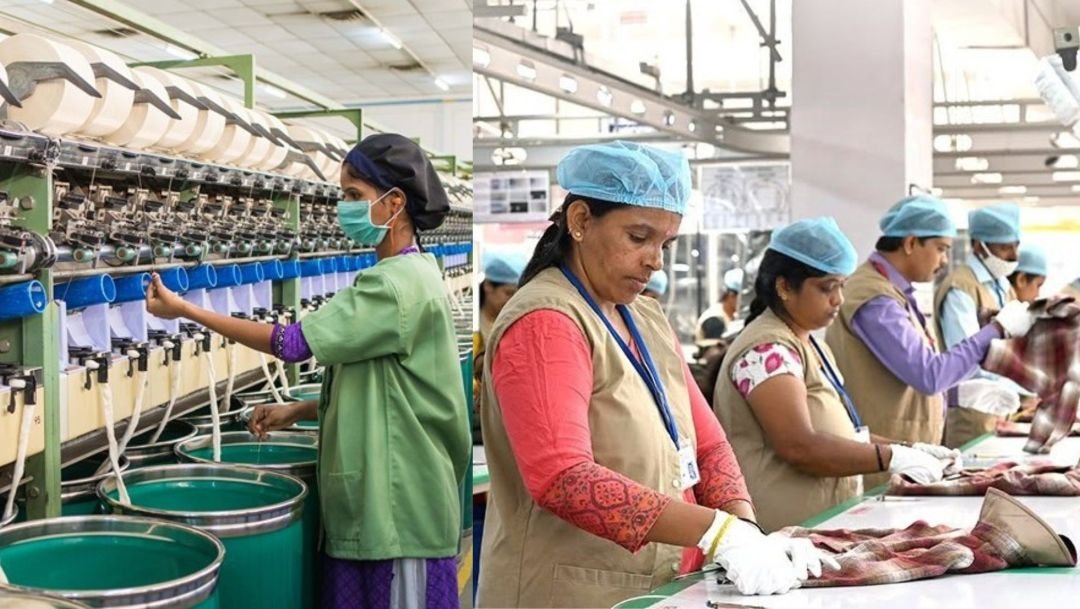
The sector outpaced Uzbekistan’s overall industrial production growth, strengthening its position as a major contributor to the country’s manufacturing economy.
TCF POST Report
Uzbekistan’s textile and apparel industry recorded production worth approximately $8.95 billion in January–September 2026, up 13.8% year on year, according to industrial production indicators published by the country’s Ministry of Economy and Finance on October 26.
The expansion outpaced overall industrial production growth of 8.1% by 5.7 percentage points, underlining the sector’s importance to Uzbekistan’s industrial development. Total industrial output reached approximately $91.71 billion during the nine months.
Growth outpaces the industrial economy
With production of approximately $8.95 billion, textiles and apparel ranked among Uzbekistan’s largest industrial segments, ahead of the automotive industry, which recorded output worth approximately $6.33 billion. Construction materials production reached $3.96 billion, while electrical engineering output amounted to $3.24 billion.
The textile and apparel sector accounted for approximately 9.8% of the country’s total industrial output over the period, based on the ministry’s reported figures. This places the industry among the significant contributors to Uzbekistan’s manufacturing base.
Annual target points to continued expansion
Uzbekistan has set a 2026 production target of approximately $14.03 billion for textiles and apparel, corresponding to planned annual growth of 13.5%. The reported nine-month growth rate of 13.8% was slightly above that target growth rate, although the full-year outcome will depend on production during the final quarter.
The country’s overall industrial production target for 2026 stands at approximately $111.15 billion, with planned growth of 8.0%, compared with the 8.1% increase recorded during January–September.
For the wider Textile, Clothing and Footwear value chain, the figures offer a positive signal on the scale and momentum of Uzbekistan’s domestic industrial production. Continued expansion could strengthen the country’s manufacturing base and its potential role in international sourcing networks.
However, production growth alone does not establish whether the industry is gaining export market share, creating additional jobs or improving productivity. The ministry’s published indicators do not provide a textile-specific breakdown of exports, investment, employment, capacity utilisation or output by product category. These measures would be needed to determine how much of the production increase translates into stronger international competitiveness and wider economic impact.
*Currency note: USD equivalents are approximate, calculated using the official exchange rate of UZS 11,838.92 per US dollar on October 26, 2026.